

Guest blog by Carrie Bignell
Carrie Bignell is a Deputy Head Teacher and parent of teenager living with PANDAS. Carrie wanted to write a guest blog to share her family’s story, and to highlight how schools can make a difference to young people affected by PANS or PANDAS.
My child vanished and a stranger landed:
A deputy head’s perspective on PANS and PANDAS
A career working with children and young people from ages 0 to 19 naively makes you think you’ve seen it all, and that nothing can surprise you.
Then your child has a difficult day, then it’s one week, one month…, your own child is changing; suddenly becoming anxious, angry, and unable to sit still.

So, you follow the rules… You go to the GP, seek CAMHS support, and speak to the school. But wait, you are a major cog in that school; you are the Deputy Head. You know the process and what is required: keep them in school, get them into lessons, maintain the routines, and make sure they fight the feelings and don’t fly.
You tell yourself that this is just a stage, the transition from primary school causing anxiety, or that hormones are starting to come into play. How many times have you said this to parents, thinking you were a semi-expert?
But this is your child. You know them, and this is different! They were happy, so happy. Your gut tells you this is not the same; it doesn’t fit the mould.
You search, you research!
‘My child has vanished and a stranger has landed—what is this?’
In the depths of social media and the internet, you discover something that has never featured in your SEN training and was never mentioned by colleagues: PANS and PANDAS.
Your child embarks on a battle to get treatment, to heal. You are with them every step of the way. In the quiet moments that eventually come, you remember the children you’ve met who suddenly changed, who were so different at primary school, whose parents had tried everything to get their child back… you wonder if you have let them all slip through the net. The answer was there, but you didn’t know!
“In the depths of social media and the internet, you discover something that has never featured in your SEN training and was never mentioned by colleagues: PANS and PANDAS.”
How schools can make a difference
Now, as PANS and PANDAS are being seen more by parents and doctors, a new challenge emerges: how can a school, and an education system that is overstretched and tends to put children’s needs in boxes, support these children?
There are some simple things that I believe will make a massive difference:
- Believe and accept the diagnosis.
- Involve the right staff from the start: Bring attendance, SEN, pastoral, and senior staff into discussions immediately.
- Utilise available training: Take advantage of the amazing PANS PANDAS UK education training. Not only does this give staff vital knowledge, but it helps the family feel truly understood and recognised.
- Authorise the absences: Accept that this may hit your persistent absence figures, but remember that this child is genuinely ill.
- Work flexibly within your boundaries: support the young person within the boundaries of what is reasonably practicable as a school.
- Acknowledge the family crisis: recognise that this family is dealing with a world turned upside down and is doing everything humanly possible to help their child. More boundaries, a bedtime routine, and a rewards chart are not going to fix this.
- Think about the siblings: their lives will undeniably have changed. They could have seen their sibling change overnight, they may be the target of rage, and could feel incredibly scared and worried. This condition affects the entire family.
- Be aware and signpost: learn the symptoms and help other families by signposting them when symptoms first appear.
As a parent and a Deputy Head, I can see the challenge from both perspectives:
The parents’ perspective:
They want their child supported by a school that understands their child’s needs and how quickly they can change. They need a school that recognises these are medical conditions and understands that skills can be lost overnight; like a maths superstar who suddenly forgets how to count.
The schools’ perspective:
They are overstretched. They have skills and methods to support neurodivergence and EBSA, but a child’s PANS or PANDAS needs do not fit neatly into those boxes. Meanwhile, they have rigid attendance targets to meet and Ofsted watching.
Looking forward
PANS and PANDAS diagnoses, treatment, and support are just the start of a long journey. Huge steps forward have been taken, yet for those of us in the thick of it, it can all feel like too little, too late.
In the UK, research is limited, but initiatives like the NIHR funded Exeter Uni project PANS PANDAS unveiled are helping to work out what we don’t yet know about the conditions.
In the future, there will be research-based support and guidance for schools on how best to support young people with PANS and PANDAS, just like there is for autism and mental health concerns. But schools cannot wait for this to step up! Children and families across the UK need to feel seen and supported today by the schools they attend.
Writing this, I feel lucky to be a cog in the system, able to make changes from the inside to support my child. Our school proves that with a Headteacher and a team that follows these simple steps, children and families living with PANS or PANDAS see school as an asset, a building brick on the recovery journey. Currently, not every family is this lucky, but that must change.
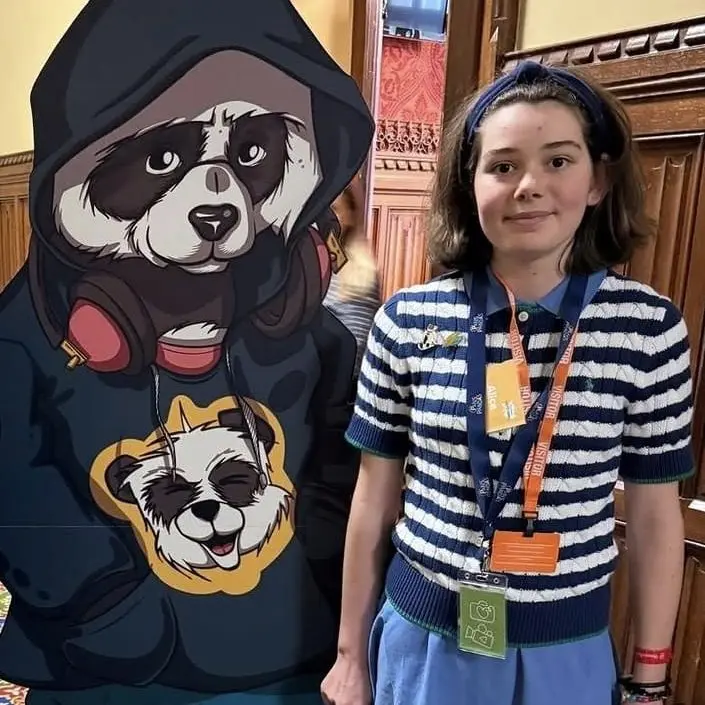
I have been trying to find the right way to end this blog, to sum it all up, but I think my daughter had it right when she attended Parliament with the Youth Board and spoke to MPs:
“Don’t go away from this feeling sorry for those poor children, go away thinking what can I do make things better for them, and make a difference.”
I hope that this article will help make a difference for our young people at school, and that schools read it and realise it is fully within their power to make a huge difference!
Thank you Carrie
Carrie has recently contributed to the Education Executive digital magazine, helping raise awareness about PANS and PANDAS. Read her article here (page 4).
If you would like to write a guest blog for PANS PANDAS UK, please use this form to get in touch.
The views, opinions, and experiences shared in guest blogs belong solely to the author/s and do not necessarily reflect the views of PANS PANDAS UK. The charity does not endorse, recommend, or evaluate individual products, treatments, or services. Content is provided for general information only and should not be interpreted as medical, educational, or professional advice.
