

Guest blog by Dr Vicky Queralt
Dr Vicky Queralt is a Clinical Psychologist and PANS PANDAS UK Trustee. Her guest blog explores her journey behind creating ‘The Flare: a story about PANS/PANDAS and ways to cope’.

Why I wrote ‘The Flare’
In short, I wrote The Flare because I wanted to offer some support to families facing the immense challenges that can come when a child changes dramatically and unexpectedly; particularly something child-facing, friendly and accessible.
I wanted it to help children, parents and those around them make a little more sense of what might be happening, give them a way to talk about it and offer some small, practical ways of coping and, importantly, some hope.
Making sense of what is happening
As a clinical psychologist, I have always been passionate about understanding why something is happening, because understanding can change how we respond. When we understand more about what might be driving a child’s thoughts, feelings or behaviour, it can help us respond with greater compassion and find support that better fits what they need, rather than simply focusing on what we can see on the surface.
From both personal and professional experience, I know how confusing and overwhelming PANS/PANDAS can be for the whole family, and especially for the child living through it. PANS/PANDAS is still not widely understood, and families can often feel they aren’t being heard or believed. When everything already feels uncertain, being listened to, believed and taken seriously can make an enormous difference.
“More than anything, I hope The Flare helps children and families feel a little less alone, a little more understood and better able to hold on to hope.”
Although receiving a diagnosis of PANS or PANDAS can be hugely validating, it can also be overwhelming. When something frightening is happening in a child’s brain and body, even with a diagnosis it can still be difficult to understand what is happening or know how to explain it to the child.
This is where the idea of writing a book began to develop.
I wanted children living with PANS/PANDAS to have something that felt as though it had been written for them; something that wasn’t scary, overly complicated or filled with medical terminology. Something that could help them understand why thoughts might suddenly feel frightening, why ordinary activities might feel impossible, or why emotions and reactions could feel so much bigger than they used to.
I also wanted them to know they are not alone. That none of this is their fault. That other children have experienced something similar. That recovery is possible. And that there are people who understand what they are going through.

“I wanted children to have something that felt as though it had been written for them.”
Helping children make sense of the flare
When I spoke to Anna Edgell, the illustrator of The Flare, about PANS/PANDAS and the impact it can have on children and families, she seemed to understand the experience visually almost immediately. She was able to take something that can be very difficult to express in words and portray it beautifully and dramatically.
The Flare became something you could almost see: big, chaotic and overpowering at times, yet still separate from the child. That felt really important to me because underneath all of the symptoms, the child is still there. The funny child. The creative child. The child who loves animals, football, drawing, dancing, gaming, jokes, their friends, or whatever it is that makes them them.
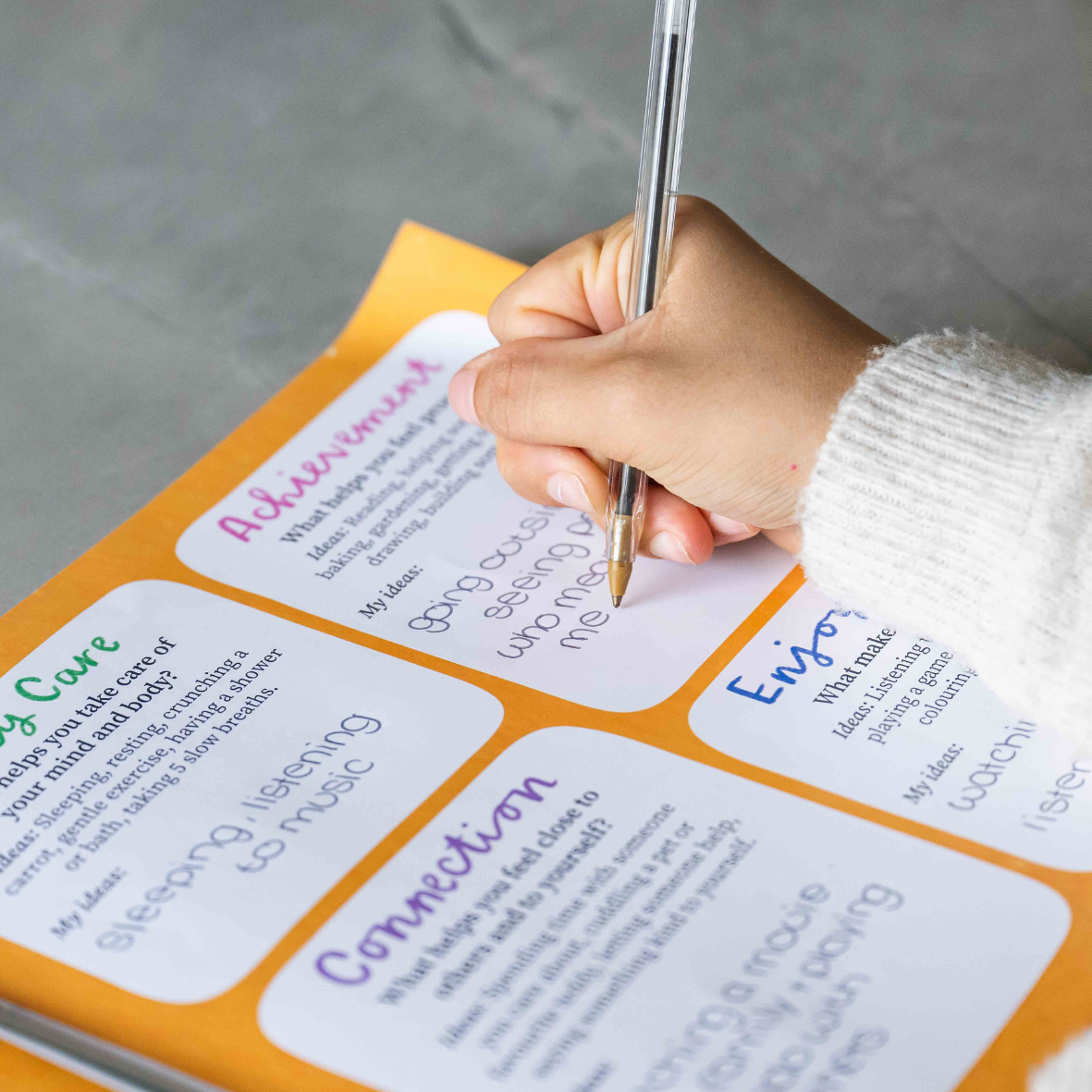
As the book developed, I also kept coming back to the fact that families experiencing PANS/PANDAS are often simply trying to get through the day. I didn’t want The Flare to become another thing they felt they had to work on. Instead, I wanted it to offer a few simple ideas alongside appropriate medical care; helping children and those supporting them understand what is happening, separate the condition from who they are, and find small, personally meaningful ways to make difficult moments more manageable.
The book has also been shaped by children and young people themselves. I was very grateful to be able to share the developing idea with the PANS PANDAS UK Youth Board. Their thoughts influenced details in the illustrations and the overall feel of the story.
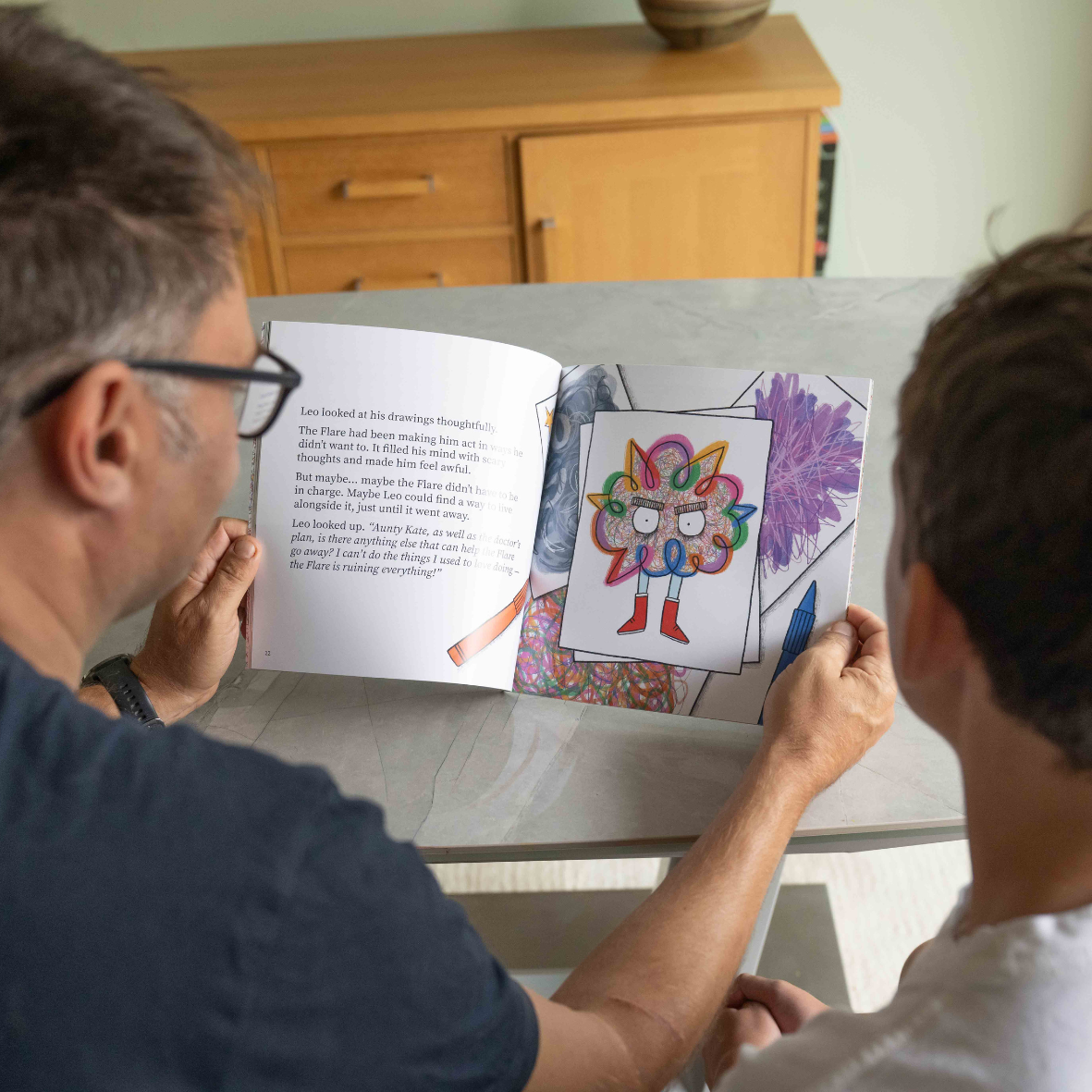
“When we understand more about what might be driving a child’s thoughts, feelings or behaviour, it can help us respond with greater compassion and find support that better fits what they need.”
Finding hope and feeling less alone
PANS/PANDAS can bring some very dark days. I wanted the book to hold on to some light too. Anna’s use of colour and the way she brought the words to life added warmth and hope to the story, while hidden stars were woven throughout as a small reminder to look for ‘glimmers’; those moments of joy, connection or movement in the right direction that can still be there, even on very difficult days.
There are also a few jokes along the way, because sometimes a little humour matters too; hopefully enough to bring a few giggles, or at least a few groans!
More than anything, I hope The Flare helps children and families feel a little less alone, a little more understood and better able to hold on to hope. If it does that for even one child or one family, then it will have done what I hoped it would.
Order your copy of The Flare
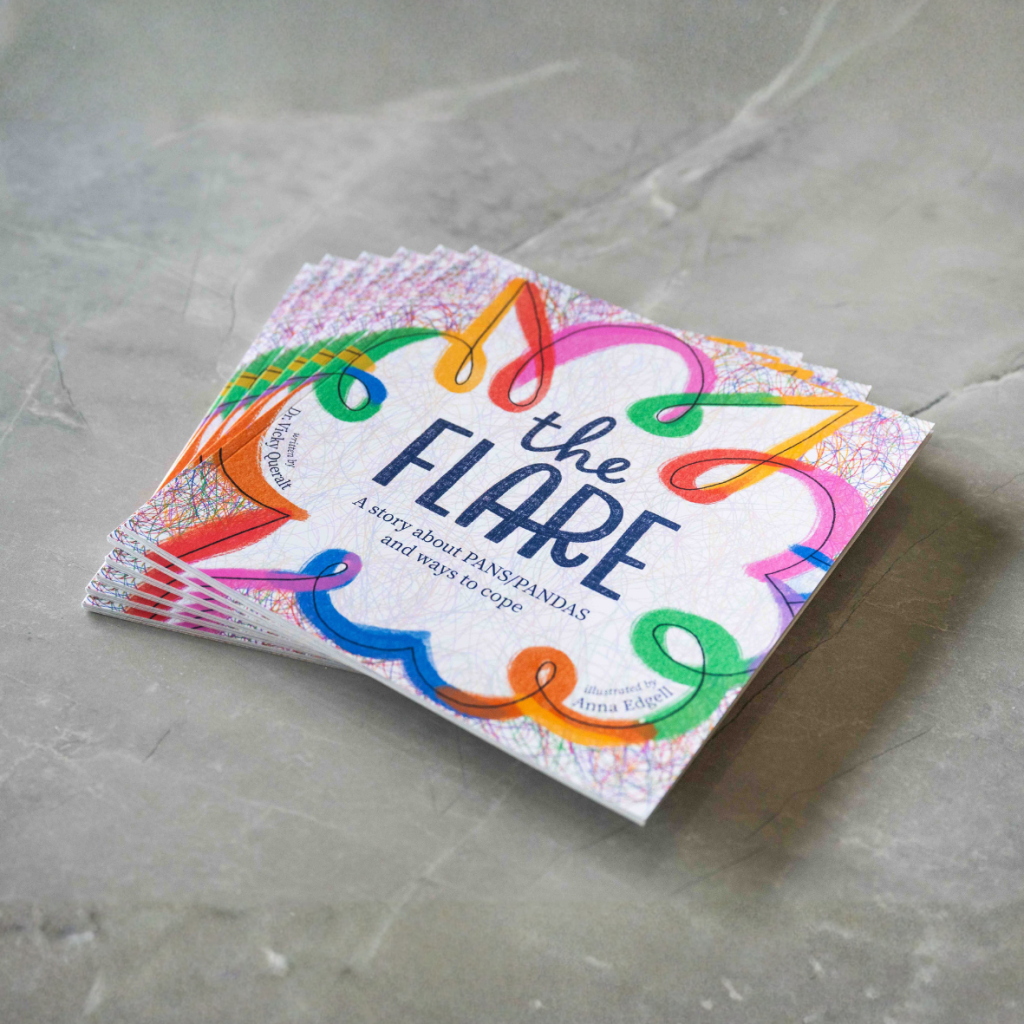
Illustrated paperback available now!
Also available
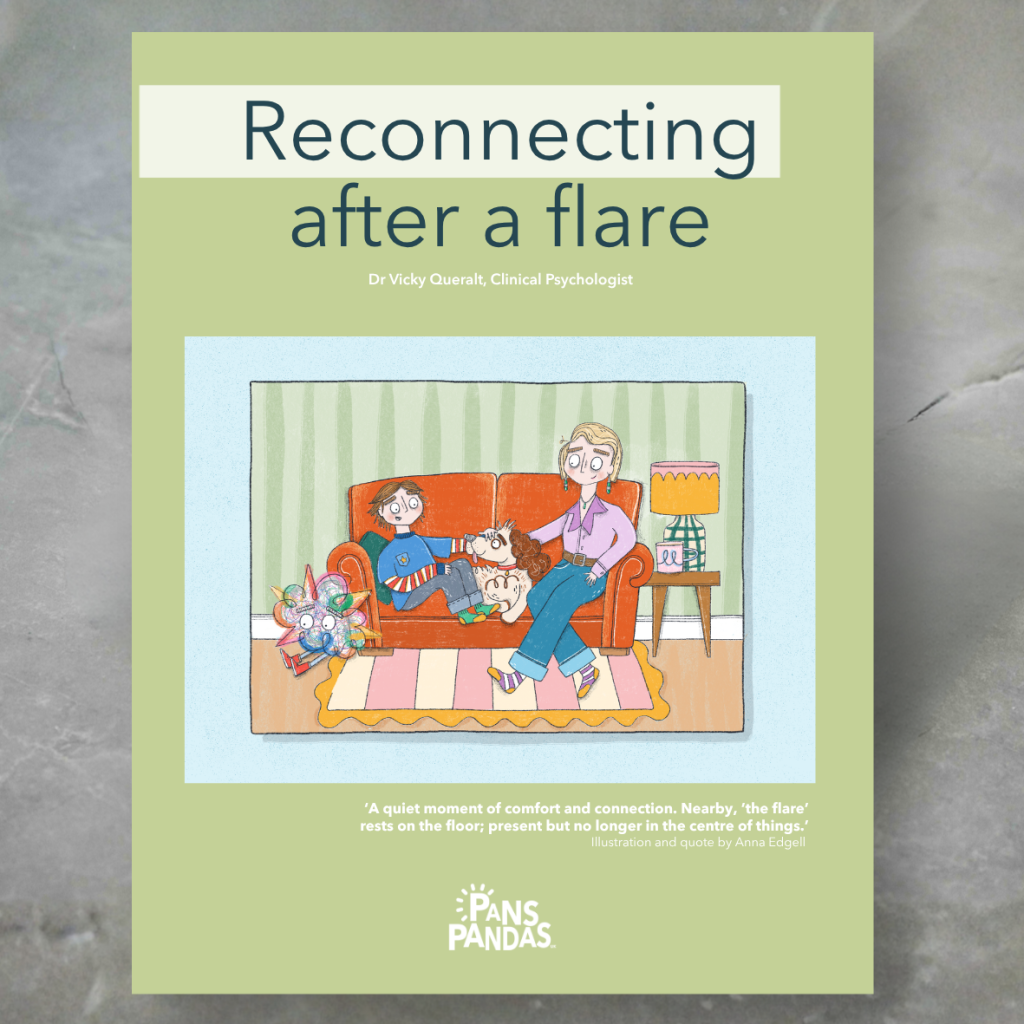
A workbook of strategies to support a young person and their family to reconnect after a symptom flare.
Also available, find ways to connect the family after a flare.
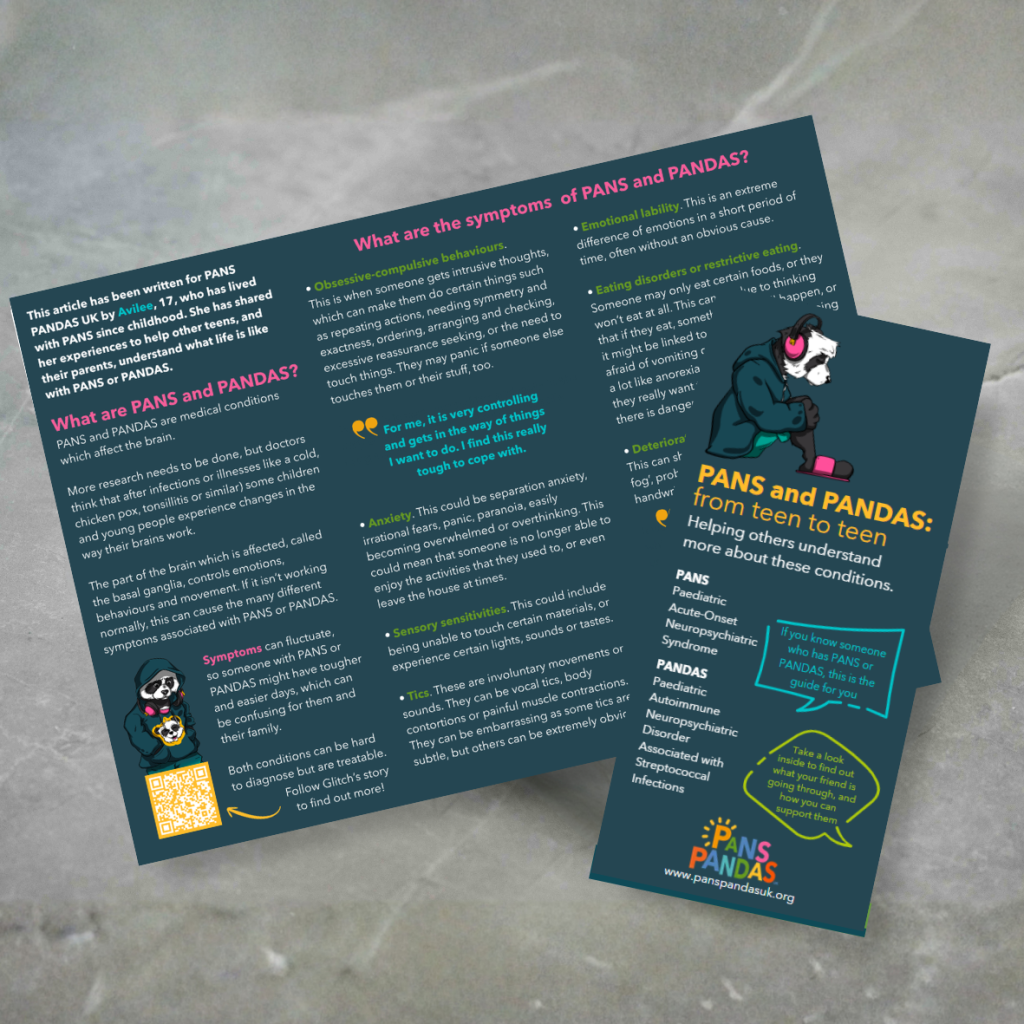
Our teen to teen leaflet is designed to help a young person explain PANS or PANDAS to their friends and family.
Also available, find ways to connect the family after a flare.
Thank you Vicky
If you would like to write a guest blog for PANS PANDAS UK, please use this form to get in touch.
The views, opinions, and experiences shared in guest blogs belong solely to the author/s and do not necessarily reflect the views of PANS PANDAS UK. The charity does not endorse, recommend, or evaluate individual products, treatments, or services. Content is provided for general information only and should not be interpreted as medical, educational, or professional advice.
